Licenses
Licenses allow managing the software licenses acquired by the organization and monitoring their consumption based on the actual use of applications.
This information facilitates control over the number of licenses used, the detection of potential excesses or underutilization, and cost estimation, helping to optimize software licensing expenses.
Types
There are three types of licenses:
- Workspace installation license. Consumption is counted when at least one of the applications forming the license is installed on the device.
- Workspace execution license. Consumption is recorded when an application is run on a device, regardless if it's installed.
- User-specific execution license. Consumption is calculated when a user executes any of the associated applications.
- User Web App license. Consumption is based on users who use the web applications linked to the license.
The configured license type will determine how its use is measured.
License consumption is calculated in real-time. Usage begins to be recorded from the moment the license is created and at least one application is associated with it.
Create a License
To create a license, click the New button. A form will open with the following fields:

- Name. Identifier of the license.
- License type. Workspace installation license, Workspace execution license, User-specific execution license, or User Web App license.
- Licenses purchased. Number of licenses acquired.
- License cost. Monthly cost of the license, expressed in euros.
- Notes.: Additional relevant information about the license.
- Expires on. Expiration date of the license.
- Warning period (days). Number of days before the expiration date when a notification will be sent.
- Notification emails. Email addresses, separated by commas, will receive the expiration notice.
- License key. Informative field to record an internal identifier or reference for the license. This value does not intervene in any automated process.
License expiration control
This feature allows configuring the automatic sending of email notifications when a license approaches its expiration date.
For this, during the creation or editing of the license, the following fields must be configured:
- Warning period (days)
- Notification emails
When the license enters the defined warning period, the system automatically sends an email to the configured addresses.
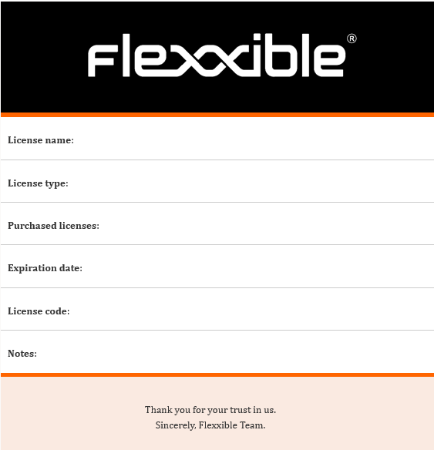
License expiration notifications are sent at 12:00 UTC.
License list
The license list includes the following information:

- Name. License name.
- License type. Workspace installation license, Workspace execution license, User-specific execution license, or User Web App license.
- Licenses acquired. Number of licenses purchased.
- Usage (current month). Number of licenses used during the current month.
- Usage (last month). Number of licenses used during the previous month.
- Expires on. Expiration date of the license. Its status is represented by colors:
- Red: expired license.
- Yellow: license within the warning period.
- Green: valid license and out of the warning period.
- See details. Allows access to the detailed view of the licenses.
License detail view
Depending on the license type, different tabs will be available. In all cases, the following are shown:
Details
The Details tab gathers general information about the license and additionally shows the following data:
- Monthly license cost
- Warning period (days)
- Notification emails
- License key
- Issue, update, and expiration date
- User who made the last modification

From this tab you can:
- Modify the license information using the
Editbutton. - Add additional notes.
- Access audit logs through the
View Audit Logsbutton that opens the Audit view.
Installed apps
Displays the applications associated with the license.
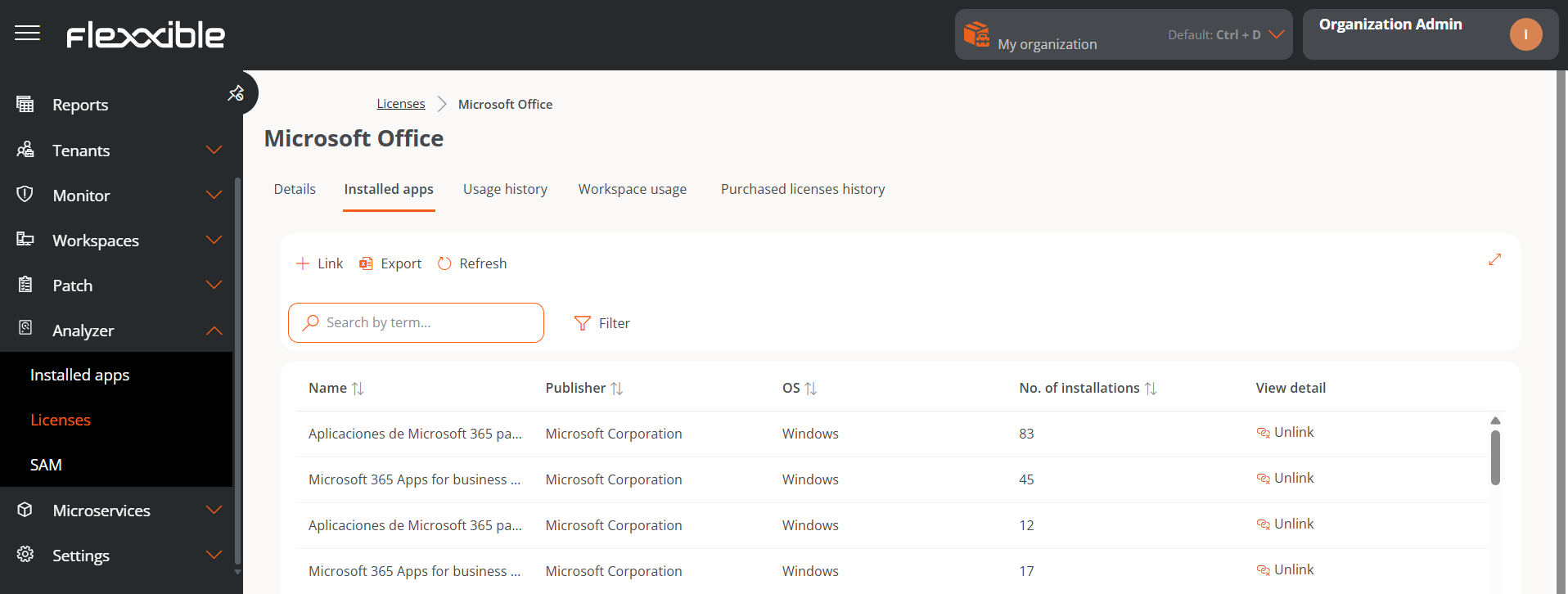
The table includes the following information:
- Name. Application name.
- Publisher. Company that developed the application.
- OS. Operating system on which the application runs.
- Number of installations. Number of installations of the application.
- View detail. Allows Unlinking or Linking an application. The latter displays a form with options to link an application to the list of installed applications. The
Refreshbutton updates the information after making changes.
Usage history
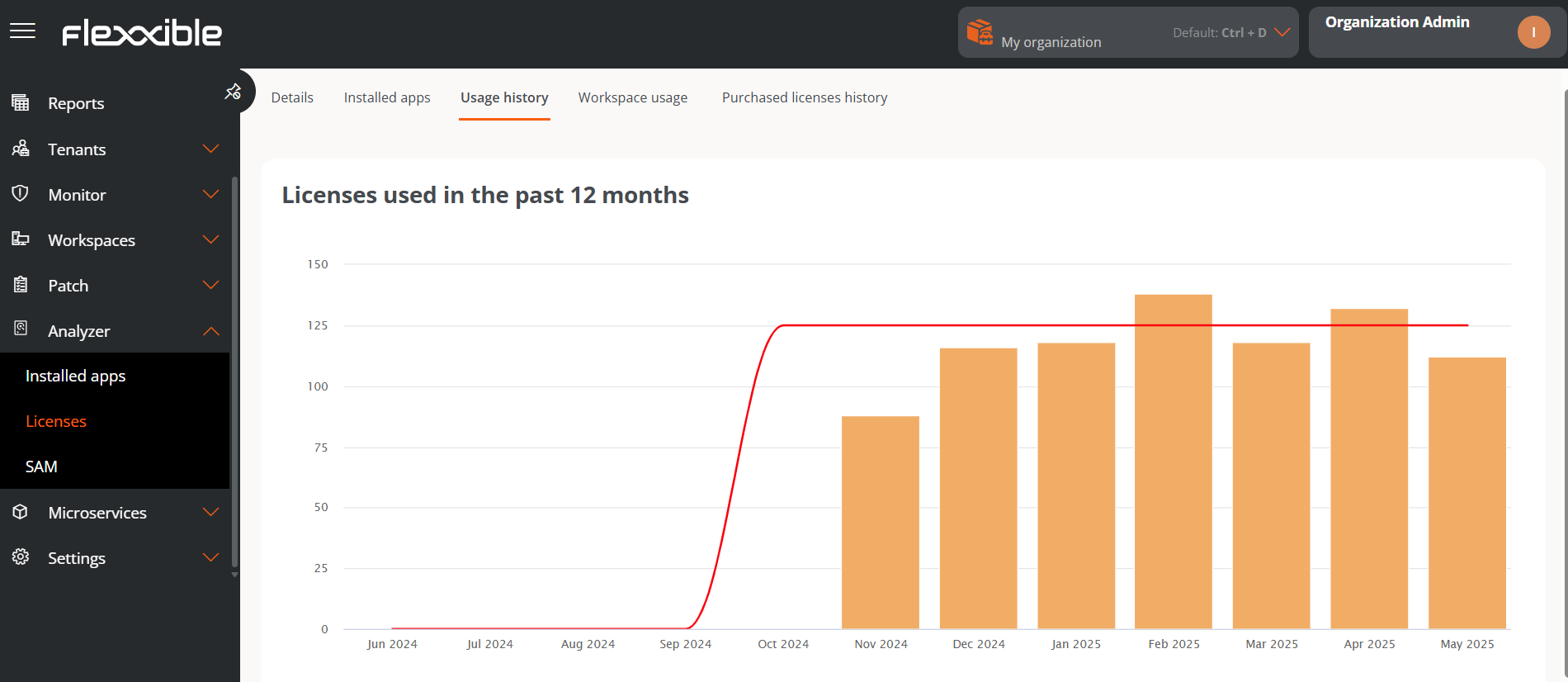
Represented by a bar graph, it shows the monthly evolution of license consumption since its creation.
Purchased license history
Shows the license purchase history. The table contains the following information:
- Username
- Licenses purchased before
- Licenses purchased after
- Updated on
Detail view by license type
The following tabs activate depending on the license type.
Running Processes
Shows the processes linked to the license whose execution registers a license as In Use.
The table includes the following information:
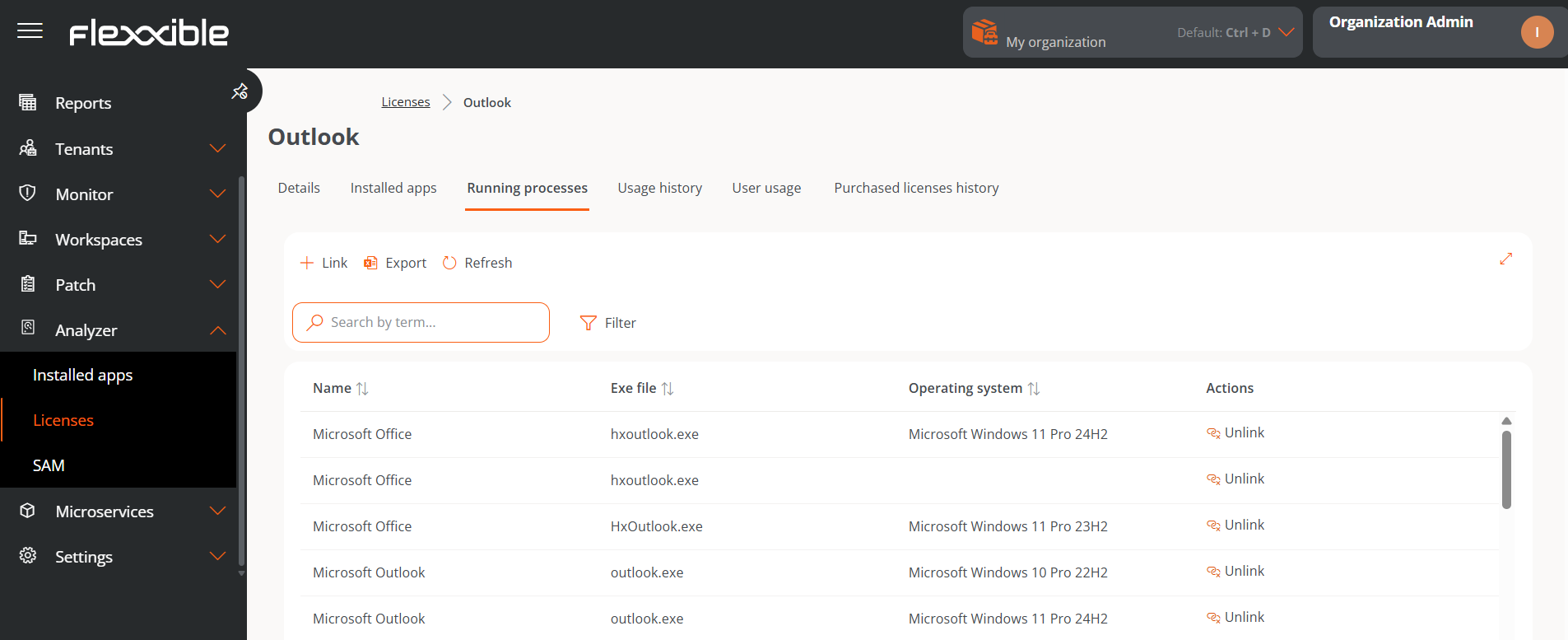
- Name. Application name.
- Exe file. Executable name.
- OS. Operating system where the process is detected.
- Action Allows Linking or Unlinking applications to the license.
Available for licenses of type Workspace execution license and User-specific execution license.
Workspace usage
Displays the devices currently consuming the license.
- Name. Device Name.
- IP Address. IP Address of the device.
- OS. Operating System.
- CPU cores. Number of processor cores.
- Total RAM. Installed RAM memory.
- Type. Device type.
- Last user. Last user who logged in.
Available for licenses of type Workspace installation license and Workspace execution license.
User usage
Displays the users currently consuming the license.
Available for licenses of type User-specific execution license and User Web App license.
Web Apps
This tab shows the web applications linked to the user type Web App license.
Once at least one web application is linked, the consumption is recalculated daily based on the number of unique users using any of the applications during the current month. This information is also used in the SAM section to identify potential optimization opportunities for licensing.
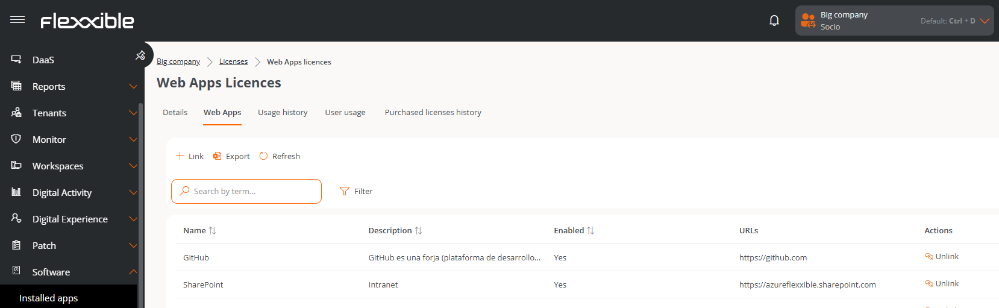
The table shows the following information:
- Name. Application name.
- Description. Application description.
- Enabled. Indicates if the application is enabled.
- URL. Web addresses of the application.
- Actions. Allows unlinking the application from the license.
License consumption will not start calculating until at least one Web App is linked.
Link a web application
-
Click the
Linkbutton located above the table. -
Select the web application you wish to associate. Only Web Apps created for the organization will be available.
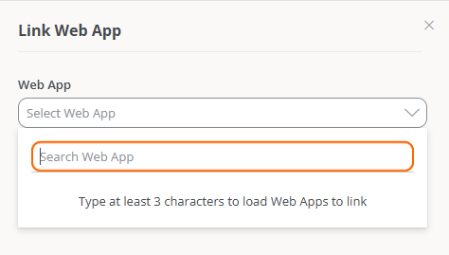
-
Click on
Link.